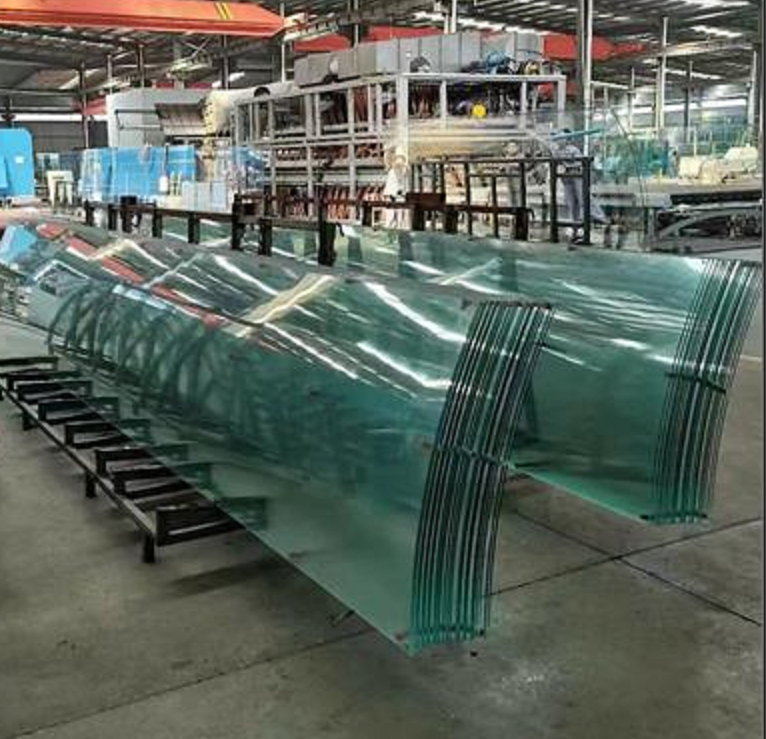
When that big panel hits the bending station, the clock starts ticking. If the heat front isn’t clean across the sheet, you’ll see roll-in at the edges and optical distortion in the middle. Ramp too slow, and throughput drops while the furnace backs up. You need repeatable temperature from that bending heater, fast, or the whole cell takes the hit. What matters under the hood We spec these large-panel bending heaters with short-wave quartz emitters—quick response, high power density. In practice, that gives you a controlled ramp up to 15°C/s, so you can get from ambient to operating temp without tying up the line. Face temperature stays within ±2% across the active zone, which keeps thermal stress from spiking and protects edge integrity. Power density is tuned to 30–40 kW/m²—enough to push Large, thick sheets without overshooting the setpoint. The module is built for the floor: 400/480 V, clean lead routing, and standard mounting for a straightforward retrofit. Here’s why this plays well on a bending line: time is yield. A fast, even heat shortens the cycle window and cuts the risk of breakage from thermal shock. When uniformity is stable, sag and curvature repeat piece after piece, so the glass lands on spec without rework. You also save energy because the emitter heats the glass directly, not the air, and the quick ramp keeps idle losses down. The short version? More panels per hour, fewer scrapped loads, and quality you can bank on. A couple of practical notes. These heaters work with most bending frames, but edge clearance matters. Plan for at least 25 mm around the perimeter to avoid shadowing and contact. Keep the emitter surface clean—dust and coating overspray will skew emissivity and drift uniformity. Expect a warm-up period after install to settle the control loop. Pair the heater with a calibrated pyrometer for closed-loop control, and you get repeatable bend performance shift after shift.