Getting Specialty Glass Coatings Cured at Ultra-High Temps—With IR Halogen Heaters Built for the Job
We build custom infrared heating setups for the flash-off zone on specialty fire-resistant glass paint lines. The whole point? Hit ultra-high temperatures fast enough to push the coating through a deep, molecular-level cure. And the tool we lean on? A shortwave infrared halogen tube, packed dense with heat, so it can deliver the raw power the process demands.
Power, voltage, and heat—kept simple
Here’s what it runs on: 400V, delivering 2500W through a compact 300mm tube. That’s a serious amount of heat packed into a small footprint. The result is a tight, focused heat zone that lets the glass soak up energy quickly—exactly what you need to cure fire-resistant coatings all the way through. But with that kind of power density, your line needs to be ready. A properly sized cooling setup is a must to keep ambient heat in check and protect everything sitting nearby.
Why the halogen design works
We use a shortwave halogen element inside a quartz tube. Two big wins come with that choice. One, the halogen cycle keeps the filament hot and stable, so output stays consistent over the lamp’s life. Two, the quartz envelope sends infrared energy straight to the target—without wasting heat on the air. It wires up with an R7s connector, which gives you a secure, low-resistance connection. In practice, that means a tough, drop-in piece that can handle the thermal shock of running 24/7.
What it actually does in the flash-off zone
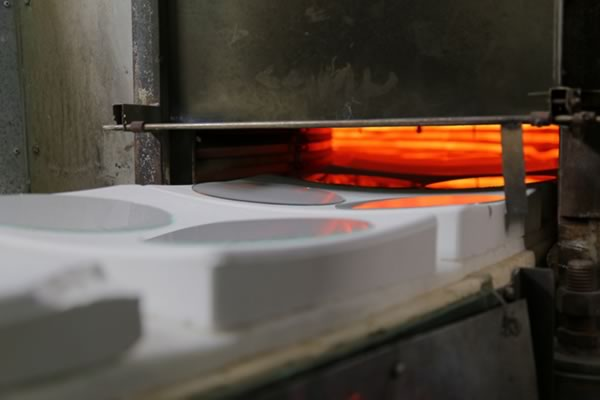
In the flash-off zone, this heater isn’t just warming things up. It’s kicking off the chemistry. The intense, focused IR radiation cuts through the coating, driving off solvents and triggering the polymer cross-linking that makes the finish truly durable. And the payoff? It runs faster than convection ovens and takes up less floor space. If you’re running a specialty glass line, that means a tighter footprint and lower energy use per unit. The system is tuned to match the exact thermal profile the coating chemistry needs, so the final product hits its fire-resistance ratings without compromise.