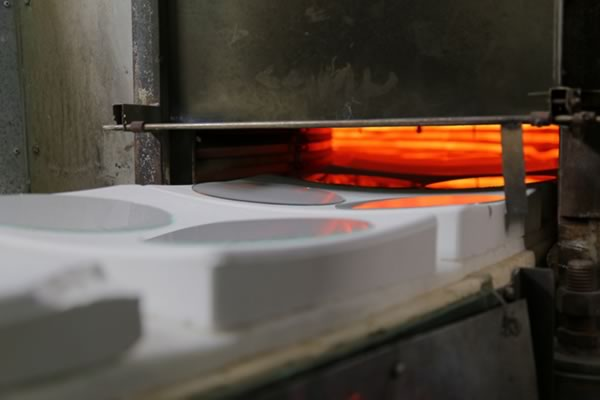
Cutting ultra-thick glass is a grind. Literally. If you try to score those heavy plates cold, your cutting wheel is basically fighting a losing battle. The blade dulls almost instantly, and your fracture lines end up looking jagged and inconsistent. It’s frustrating, and it wastes a lot of material. We found a better way. Instead of forcing the blade through cold glass, we use shortwave infrared (IR) lamps to soften the glass right where the cut needs to happen. Here is the trick: standard heaters only warm the surface. That doesn’t do much for thick glass. But shortwave IR actually sinks deep into the material. By targeting the cutting line, we get the glass to a point where it’s just a bit more forgiving. It isn’t melting—it’s just relaxing. The internal stress shifts, and suddenly, the cutting wheel isn’t fighting nearly as much resistance. And your tools will thank you. When the glass is pre-heated, there’s way less friction. You’ll notice your tungsten carbide or diamond wheels last a lot longer. Instead of swapping them out every few shifts, you can actually get some real mileage out of them. But you have to be careful with the setup. These lamps put out an incredible amount of heat. If the distance between the lamp and the glass is off, you create a heat spike that’s too sharp. If that happens, the glass might just snap on its own before the blade even touches it. You’ve got to dial in your conveyor speed and wattage to match the thickness of your glass. I’d also suggest using a precision shield to keep the IR beam focused. It keeps the heat exactly where it belongs and stops the rest of the plate from warping. One last thing: get some good ventilation. These lamps run hot. If your cabinet isn’t vented properly, you’re basically baking your electronics.